


Oolong Yancha, Dahongpao, Ceremony Grade (Smorgasburg Dec'25 Edition)
Oolong Yancha, Dahongpao, Ceremony Grade (Smorgasburg Dec'25 Edition)
. Harvest
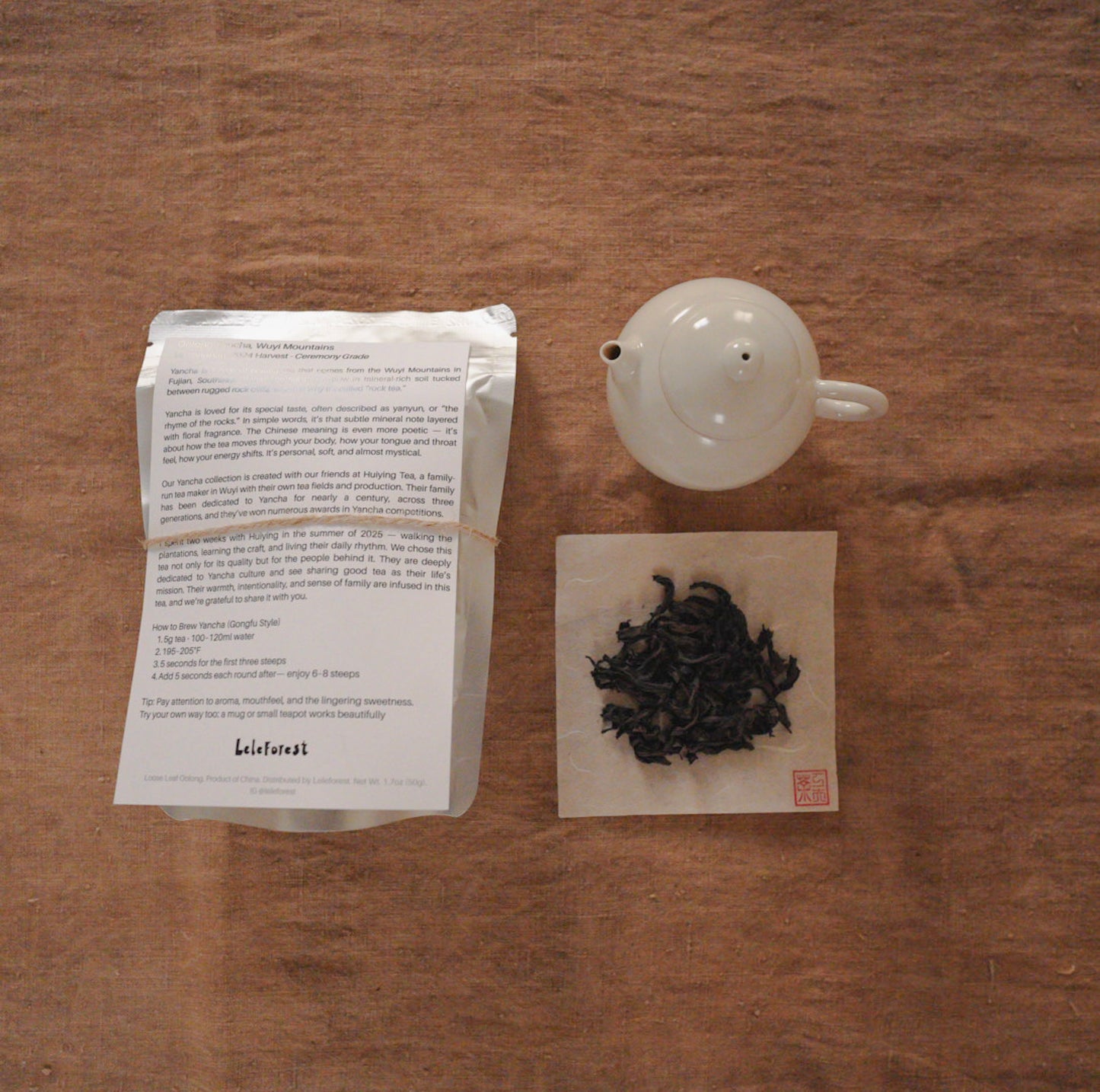
Oolong Yancha, Wuyi Mountains
Dahongpao, 2024 Harvest - Ceremony Grade, 50g
Yancha is a type of oolong tea that comes from the Wuyi Mountains in Fujian, Southeast China. The tea trees grow in mineral-rich soil tucked between rugged rock cliffs, which is why it’s called “rock tea.”
Yancha is loved for its special taste, often described as yanyun, or “the rhyme of the rocks.” In simple words, it’s that subtle mineral note layered with floral fragrance. The Chinese meaning is even more poetic — it’s about how the tea moves through your body, how your tongue and throat feel, how your energy shifts. It’s personal, soft, and almost mystical.
Our Yancha collection is created with our friends at Huiying Tea, a family-run tea maker in Wuyi with their own tea fields and production. Their family has been dedicated to Yancha for nearly a century, across three generations, and they’ve won numerous awards in Yancha competitions.
I spent two weeks with Huiying in the summer of 2025 — walking the plantations, learning the craft, and living their daily rhythm. We chose this tea not only for its quality but for the people behind it. They are deeply dedicated to Yancha culture and see sharing good tea as their life’s mission. Their warmth, intentionality, and sense of family are infused in this tea, and we’re grateful to share it with you.
How to Brew Yancha (Gongfu Style)
1. 5g tea · 100–120ml water
2. 195–205°F
3. 5 seconds for the first three steeps
4. Add 5 seconds each round after— enjoy 6–8 steeps
Tip: Pay attention to aroma, mouthfeel, and the lingering sweetness
Try your own way too: a mug or small teapot works beautifully
Low stock
Couldn't load pickup availability
Share


How to brew
About the Origin
About the Maker

A Daily Ritual
Frequently Asked Questions
WHAT IS SHU PU’ER?
Shu Pu’er (景⼭熟) means “ripe Pu’er.”
Pu’er refers to a category of tea made from large-leaf varietals grown in Yunnan Province. Unlike green or black tea, Shu Pu’er undergoes a post-fermentation process developed in the 1970s.
Fresh leaves are carefully piled, moistened, and turned over several weeks to encourage controlled microbial fermentation. This process transforms brightness into softness and sharpness into warmth.
The result is a dark, smooth liquor with earthy depth and almost no bitterness.
It is often described as grounding — a tea that settles the body and steadies the mind.
WHAT IS THE DIFFERENCE BETWEEN SHENG PU’ER AND SHU PU’ER?
Shu Pu’er (景⼭熟) means “ripe Pu’er.”
Pu’er refers to a category of tea made from large-leaf varietals grown in Yunnan Province. Unlike green or black tea, Shu Pu’er undergoes a post-fermentation process developed in the 1970s.
Fresh leaves are carefully piled, moistened, and turned over several weeks to encourage controlled microbial fermentation. This process transforms brightness into softness and sharpness into warmth.
The result is a dark, smooth liquor with earthy depth and almost no bitterness.
It is often described as grounding — a tea that settles the body and steadies the mind.