


Non-Smoky Lapsang Black Tea, Ceremony Grade (Smorgasburg Dec'25 Edition)
Non-Smoky Lapsang Black Tea, Ceremony Grade (Smorgasburg Dec'25 Edition)
. Harvest
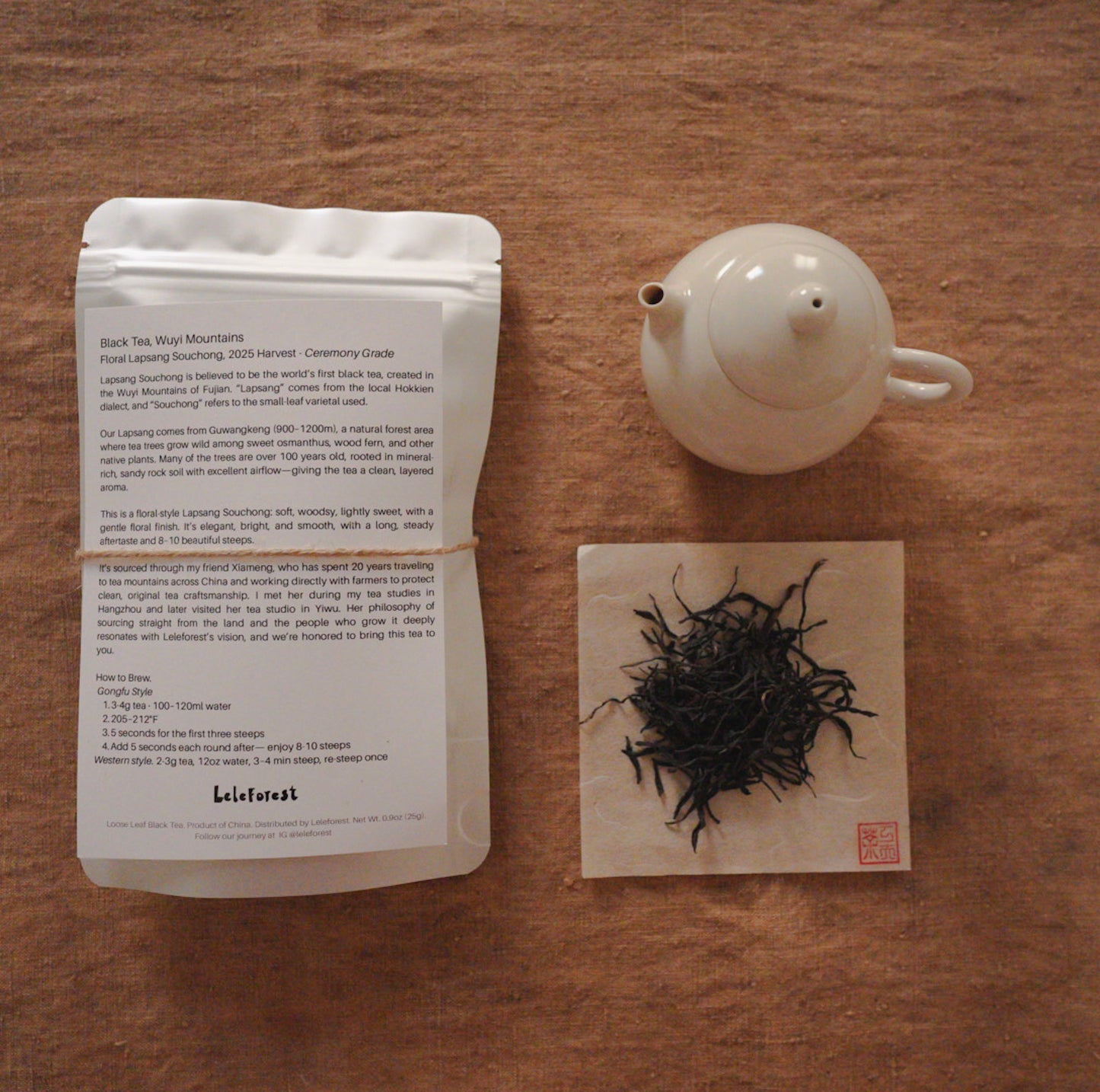
Black Tea, Wuyi Mountains
Floral Lapsang Souchong, 2025 Harvest - Ceremony Grade, 25g
Lapsang Souchong is believed to be the world’s first black tea, created in the Wuyi Mountains of Fujian. “Lapsang” comes from the local Hokkien dialect, and “Souchong” refers to the small-leaf varietal used.
Our Lapsang comes from Guwangkeng (900–1200m), a natural forest area where tea trees grow wild among sweet osmanthus, wood fern, and other native plants. Many of the trees are over 100 years old, rooted in mineral-rich, sandy rock soil with excellent airflow—giving the tea a clean, layered aroma.
This is a floral-style Lapsang Souchong: soft, woodsy, lightly sweet, with a gentle floral finish. It’s elegant, bright, and smooth, with a long, steady aftertaste and 8–10 beautiful steeps.
It’s sourced through my friend Xiameng, who has spent 20 years traveling to tea mountains across China and working directly with farmers to protect clean, original tea craftsmanship. I met her during my tea studies in Hangzhou and later visited her tea studio in Yiwu. Her philosophy of sourcing straight from the land and the people who grow it deeply resonates with Leleforest’s vision, and we’re honored to bring this tea to you.
How to Brew.
Gongfu Style
1. 3-4g tea · 100–120ml water
2. 205–212°F
3. 5 seconds for the first three steeps
4. Add 5 seconds each round after— enjoy 8-10 steeps
Western style.
2-3g tea, 12oz water, 3–4 min steep, re-steep once
Low stock
Couldn't load pickup availability
Share


How to brew
About the Origin
About the Maker

A Daily Ritual
Frequently Asked Questions
WHAT IS SHU PU’ER?
Shu Pu’er (景⼭熟) means “ripe Pu’er.”
Pu’er refers to a category of tea made from large-leaf varietals grown in Yunnan Province. Unlike green or black tea, Shu Pu’er undergoes a post-fermentation process developed in the 1970s.
Fresh leaves are carefully piled, moistened, and turned over several weeks to encourage controlled microbial fermentation. This process transforms brightness into softness and sharpness into warmth.
The result is a dark, smooth liquor with earthy depth and almost no bitterness.
It is often described as grounding — a tea that settles the body and steadies the mind.
WHAT IS THE DIFFERENCE BETWEEN SHENG PU’ER AND SHU PU’ER?
Shu Pu’er (景⼭熟) means “ripe Pu’er.”
Pu’er refers to a category of tea made from large-leaf varietals grown in Yunnan Province. Unlike green or black tea, Shu Pu’er undergoes a post-fermentation process developed in the 1970s.
Fresh leaves are carefully piled, moistened, and turned over several weeks to encourage controlled microbial fermentation. This process transforms brightness into softness and sharpness into warmth.
The result is a dark, smooth liquor with earthy depth and almost no bitterness.
It is often described as grounding — a tea that settles the body and steadies the mind.