LeleDaily
Lift (Daily Oolong)
Lift (Daily Oolong)
Wuyi Mountains, Fujian. 2024 Harvest
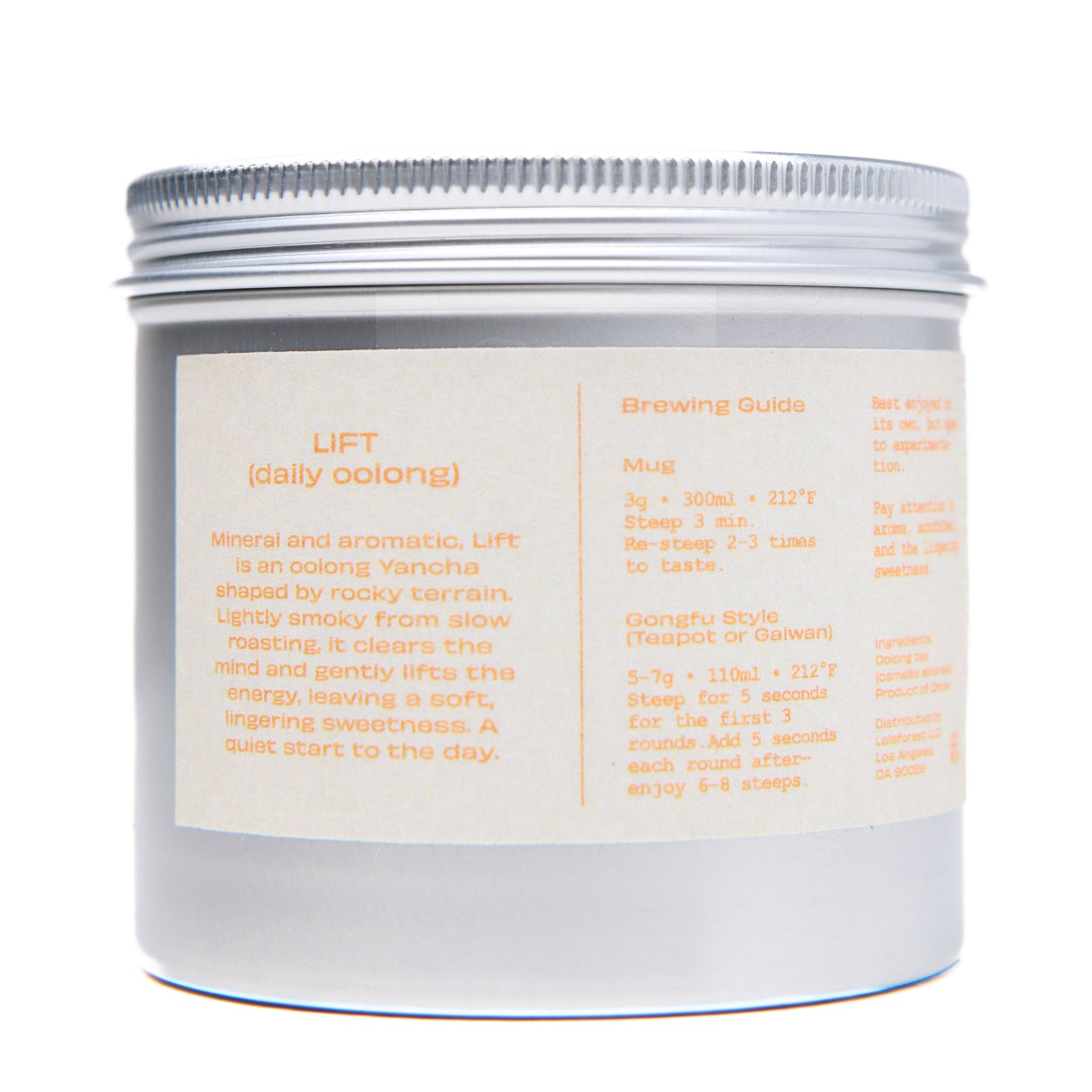
Mineral and aromatic, Lift is an oolong Yancha shaped by rocky terrain. Lightly smoky from slow roasting, it clears the mind and gently lifts the energy, leaving a soft, lingering sweetness. A quiet start to the day.
Tasting notes: Orchid• Mineral • Focused'
Processing: Charcoal roasted
Best brewing: Mug or gongfu
Net Weight: 40g loose leaf
Servings: ~8–10 gongfu sessions or 12–15 western cups
In stock
Couldn't load pickup availability
Share

Why We Chose This Tea
We chose this tea because it energizes without overwhelming.
Many oolongs can feel overly perfumed or sweet.
This one is balanced — mineral, lightly roasted, and quietly vibrant.
It’s the tea we reach for before a long day of work.
Before a run.
Before starting something new.
Lift doesn’t rush the body.
It sharpens the mind while keeping the body calm.
A gentle momentum — the kind that carries you forward.
How to brew
-
Mug
3g • 300ml • 212°F
Steep 3 min. Re-steep 2-3 times to taste. -
Gongfu Style (Teapot or Gaiwan)
5-7g tea • 110ml water • 212°F
Steep for 5 seconds for the first 3 rounds.
Add 5 seconds each round after— enjoy 6–8 steeps
About the Origin
Lift comes from Wuyishan (武夷山) in Fujian Province, a mountainous region famous for producing some of the world’s most celebrated oolong teas.
Tea plants grow among dramatic cliffs and rocky terrain known as “yan” (岩), meaning rock. The mineral-rich soil, misty valleys, and shaded forests create the distinctive character often called “yan yun” — rock resonance.
For centuries, Wuyishan teas were carried along trade routes across China and beyond. Today the region remains protected as a UNESCO World Heritage landscape, where tea gardens coexist with dense forests and winding rivers.
This environment gives the tea its signature structure:
mineral depth, soft roasted warmth, and a bright lingering finish.
About the Maker
Our Yancha collection is created with our friends at Huiying Tea, a family-run tea maker in Wuyi with their own tea fields and production. Their family has been dedicated to Yancha for nearly a century, across three generations, and they’ve won numerous awards in Yancha competitions.
I spent two weeks with Huiying in the summer of 2025 — walking the plantations, learning the craft, and living their daily rhythm. We chose this tea not only for its quality but for the people behind it. They are deeply dedicated to Yancha culture and see sharing good tea as their life’s mission. Their warmth, intentionality, and sense of family are infused in this tea, and we’re grateful to share it with you.
A Daily Ritual
Brew it before starting the day.
Let the steam rise slowly.
Drink it while the mind clears —
before the noise begins.
Frequently Asked Questions
WHAT IS SHU PU’ER?
Shu Pu’er (景⼭熟) means “ripe Pu’er.”
Pu’er refers to a category of tea made from large-leaf varietals grown in Yunnan Province. Unlike green or black tea, Shu Pu’er undergoes a post-fermentation process developed in the 1970s.
Fresh leaves are carefully piled, moistened, and turned over several weeks to encourage controlled microbial fermentation. This process transforms brightness into softness and sharpness into warmth.
The result is a dark, smooth liquor with earthy depth and almost no bitterness.
It is often described as grounding — a tea that settles the body and steadies the mind.
WHAT IS THE DIFFERENCE BETWEEN SHENG PU’ER AND SHU PU’ER?
Shu Pu’er (景⼭熟) means “ripe Pu’er.”
Pu’er refers to a category of tea made from large-leaf varietals grown in Yunnan Province. Unlike green or black tea, Shu Pu’er undergoes a post-fermentation process developed in the 1970s.
Fresh leaves are carefully piled, moistened, and turned over several weeks to encourage controlled microbial fermentation. This process transforms brightness into softness and sharpness into warmth.
The result is a dark, smooth liquor with earthy depth and almost no bitterness.
It is often described as grounding — a tea that settles the body and steadies the mind.